
EXPERT BLOGS
A Deep Dive into Construction Techniques

Cracks form due to shrinkage, excessive water content, poor curing, or load stress. To prevent them, use proper reinforcement, maintain a balanced water-cement ratio, and allow adequate curing for 7-28 days. Expansion joints help reduce thermal stress, and using fibers or admixtures enhances durability.
- Mar 17, 2025
- . By - Seema Enterprises

Electrical safety is essential to prevent shocks, fires, and short circuits. Always ensure proper grounding, use insulated tools, and avoid wet conditions while handling electric connections. Workers should wear rubber gloves and safety gear, and circuits must have lockout-tagout (LOTO) procedures to prevent accidental activation.
- Mar 17, 2025
- . By - Seema Enterprises
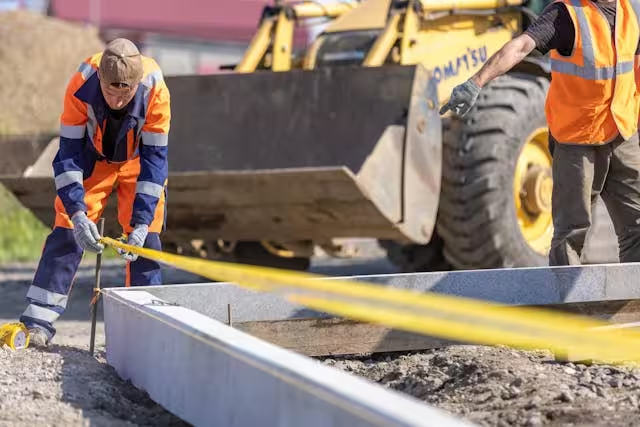
Before excavation, conduct soil tests, check for underground utilities, and use cable detectors to locate electrical lines. Proper shoring or trench protection prevents collapses, while ensuring safe entry/exit points and wearing PPE reduces risks. Monitoring water levels and weather conditions is crucial for avoiding hazards.
- Mar 17, 2025
- . By - Seema Enterprises

Curing helps hydrate cement particles, ensuring proper bond strength and reducing cracks. Standard curing lasts at least 7 days for OPC and 14 days for PPC, keeping moisture in the concrete to prevent premature drying. Methods like water ponding, sprinkling, or covering with wet cloths help maintain hydration and improve structural integrity.
- Mar 17, 2025
- . By - Seema Enterprises
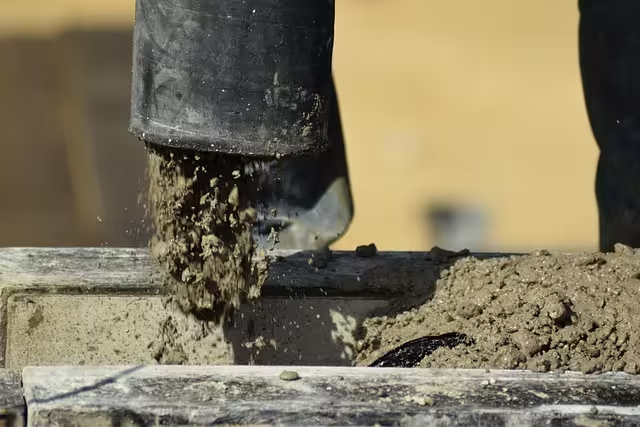
The concrete mix depends on load requirements and application type. M20 (1:1.5:3 ratio) is commonly used for flooring and non-load-bearing structures, while M25 and above are ideal for pillars, beams, and heavy-load applications. Using proper curing methods, minimizing water-to-cement ratio improves concrete strength and longevity.
- Mar 17, 2025
- . By - Seema Enterprises

Safety depends on structured planning, proper equipment use, and hazard identification. Essential factors include PPE compliance, risk assessments, machine inspections, fire safety protocols, worker training, and emergency response plans. Supervisors must enforce strict safety measures to prevent injuries and maintain a hazard-free environment.
- Mar 16, 2025
- . By - Seema Enterprises
-
W8/2 Housing colony Adityapur-1,
Adityapur, Jharkhand 831013 -
Email us:
info@seemaenterprisespvt.in -
Call on:
7908212783 / 8434138881

Our vision is to consistently deliver projects that exceed national standards and offer customer satisfaction. We are committed to providing innovative construction solutions that meet and surpass our client's expectations.
- Our Company
- About us
- Our services
- Projects
- Location map
- Privacy policy
- Useful Links
- Client portal
- Employee portal
- Admin portal
- Safety guidelines
- Careers
Connect With Us
Download App

Seema Enterprises © 2026 All Rights Reserved | Developed by - digimedius.